Introducing the Groberg MK1
Hi, I'm Geoff Groberg.
For decades I've enjoyed creating music. And I've always had a good MIDI keyboard. But I wanted something better. So I created it.
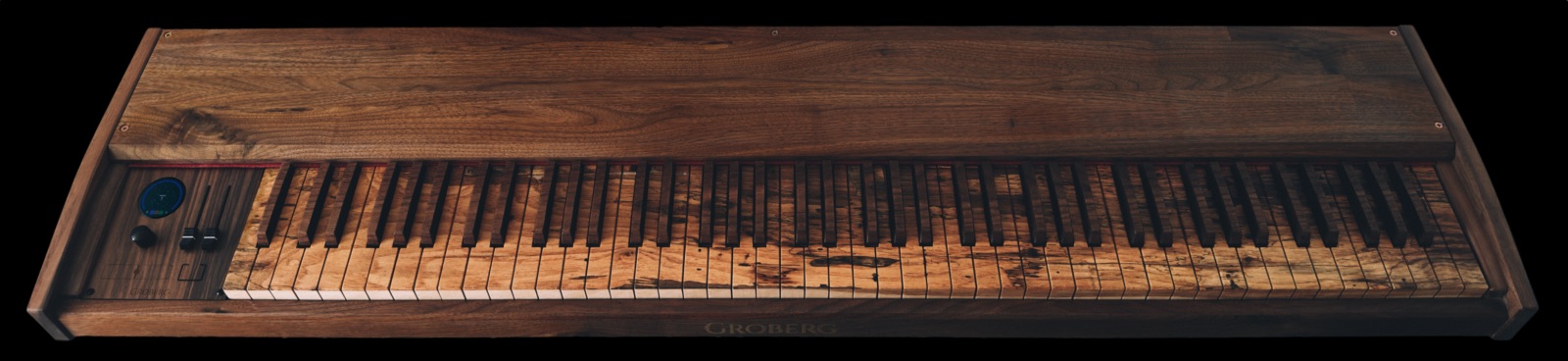
The Groberg MK1 is an expressive MIDI keyboard for your synths and digital instruments, especially the powerful new software based instruments that have revolutionized music creation.
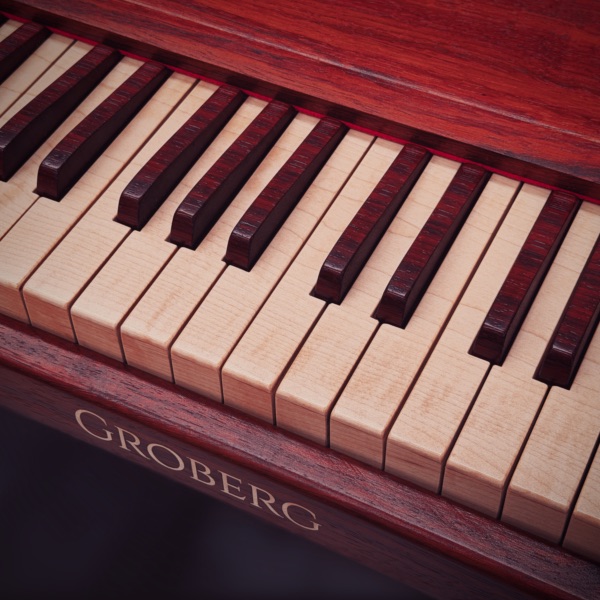
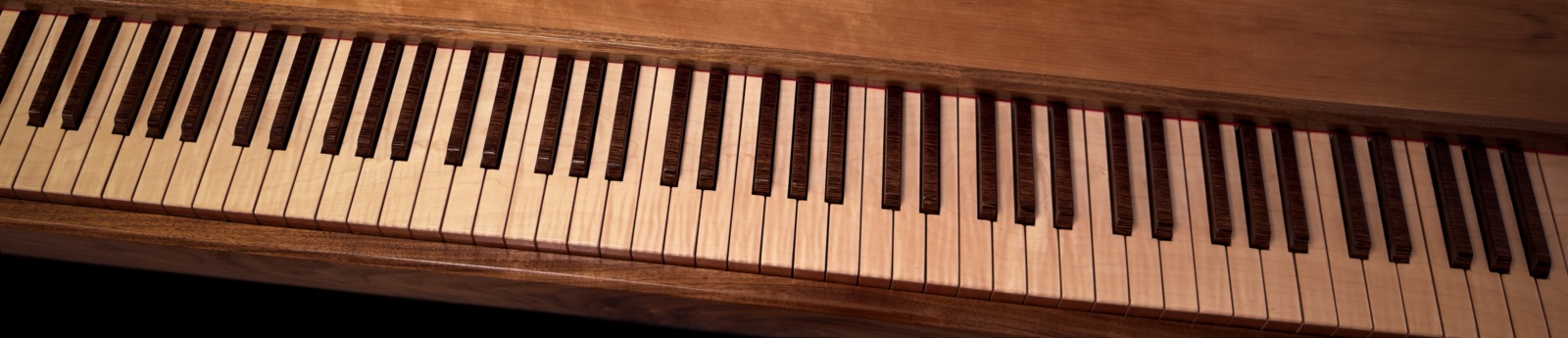
More than just another gadget, the MK1 is a handmade musical instrument built from solid, select hardwoods. Even the keytops are cut from beautiful figured wood allowing the grain to flow across the keys. It's inspiring to play. And it's built to last. It's designed to get better with age, not worse - not like the plastic keyboards that come and go and ultimately end up in the trash. This is a fine, handcrafted instrument, something you'll enjoy for the rest of your life.
Unlike other digital pianos and MIDI keyboards, the MK1 features an advanced sensor system that captures every nuance of your playing. Every beautiful wooden key feels and plays like a piano, but is sensitive and expressive with options for:
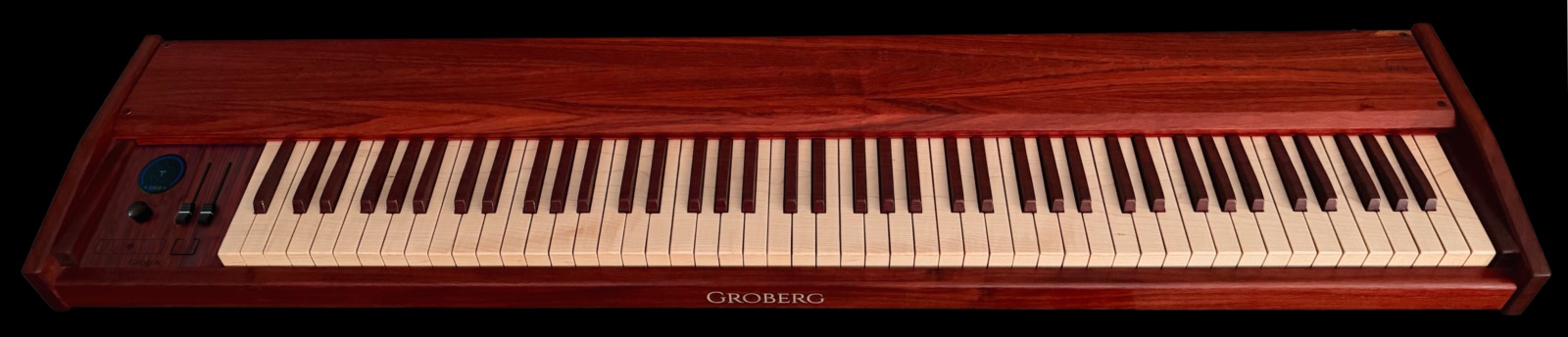
The control panel features a gorgeous touch display and expressive controls. You get two faders, a high precision rotary encoder, touch sensitive pitch bend, and our humble "alt" button. When held down it allows each key to send custom commands. Use it to trigger articulations, control your DAW, and more.
While all of these modern features are fantastic, the most important thing about a set of keys might be how they feel when you play them. This is especially true for professionals who spend a lot of time at the keyboard. With this in mind I created a new kind of keyboard action. I call it the KeyFeel™ adjustable touch weight system (patent-pending). Unlike other midi keyboards, KeyFeel™ allows you to adjust the touch weight of every key. So your keyboard can feel the way you want it to feel.
Every keyboard we make is unique and special. They take time to build. But you can customize and reserve yours now to get on the waitlist. Or sign up for our newsletter to stay in the know.
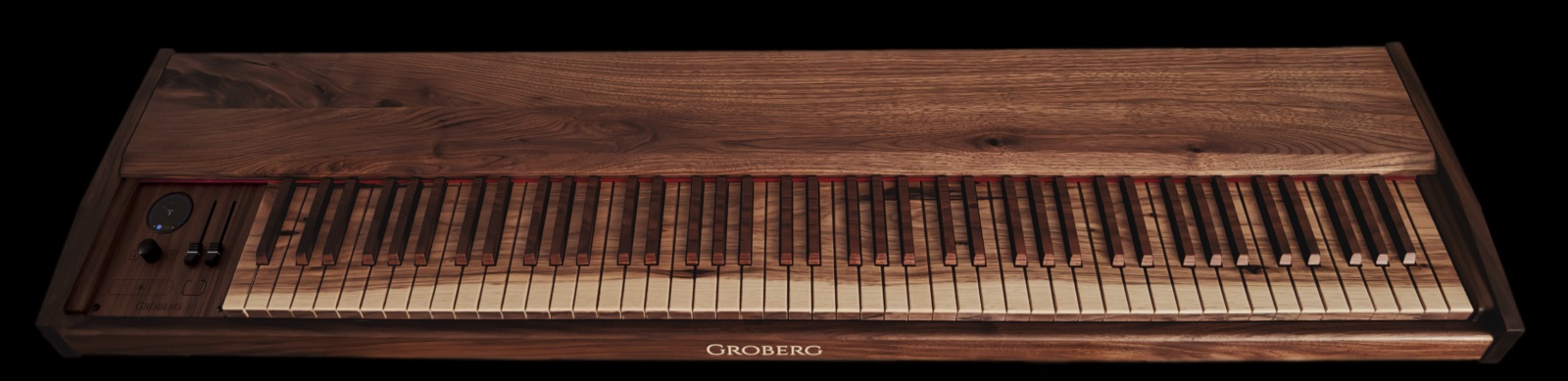
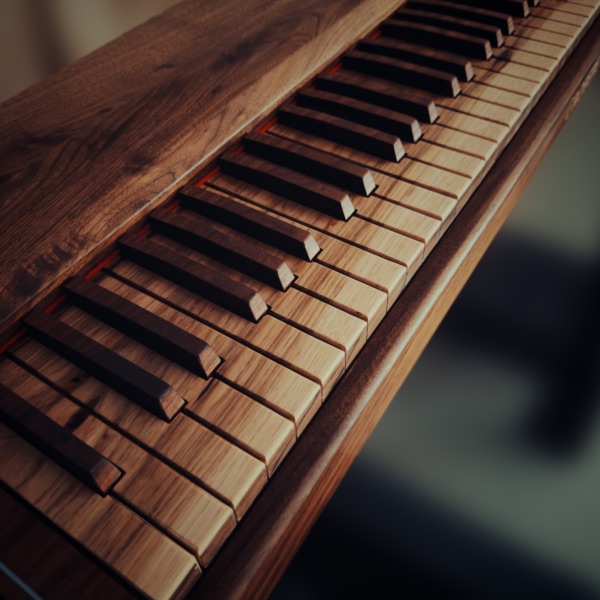
Fine musical instruments are built with premium materials - not plastic. That's why the MK1 is built with select hardwoods. Every keyboard is handcrafted and unique. We work with solid hardwoods like Black Walnut, Cherry, and Maple. And when you reserve yours you'll get to choose from our available options.
But it's not only about the frame. We took things a step further. The keysticks themselves are built from solid wood, like you would find in an acoustic piano. But unlike a piano we decided to use beautiful figured hardwood for the keytops. Historically pianos often used Ivory, which is now illegal, so they switched to plastic. But our keytops are made from beautiful figured hardwood. The grain flows across the keyboard and is polished with a durable finish that feels great under the fingertips. Our sharps are also cut from solid hardwoods, like Bolivian Rosewood.
The keyboard action on the MK1 is built with parts found in fine acoustic pianos: stainless steel pins, high quality felts, and solid wooden keysticks. Because of this your keyboard will feel great and can be maintained and regulated over time with familiar tools and techniques commonly used by piano technicians.
The patent-pending KeyFeel™ action allows the touch weight of every key to be adjusted. (Touch weight is the amount of pressure required to depress a key and is an important factor in how a keyboard feels.) Keys are adjusted using a simple screw on each key. Touch weight can be adjusted from about 20 grams (very light) up to 100 grams or more. For reference, many fine acoustic pianos aim for a touch weight of about 50 grams.
The MK1 doesn't try to emulate an acoustic piano — it has its own personality. Even at a heavy touch weight, the keys feel lighter and faster than a piano's, skipping the inertia of moving hammers and other piano action parts. The payoff is a keyboard you can play for hours without fatigue, expressive across electronic, orchestral, and hybrid sounds, not just piano.
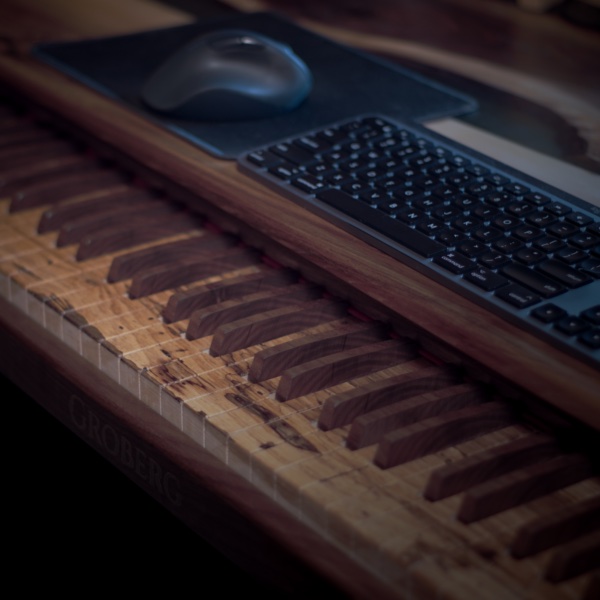
Maybe you've noticed there aren't a ton of knobs, sliders, and screens on the MK1. Actually, there's nothing on the top panel above the keys. Unlike just about every other keyboard, there's nothing at all! Why?
It makes sense that digital pianos and synths have always had their controls above the keys. That's the natural place to look. But times have changed, a lot. These days the computer, your DAW, is the heart of a modern studio. Why keep staring down into a tiny screen above your keys when the real controls are right in front of you on a beautiful large display? And why stretch across a large panel of controls to get to the computer keyboard and mouse/trackpad? The fact is, your DAW is where you find and select sounds. Even if you have hardware synths they are likely routed through your DAW.
The MK1 is designed with your DAW in mind. You can set it up however you want, but I like to have it on a drawer slide under my main desk. I can slide it out of the way when I'm not using it. And when I am, it only needs to slide out about 6 inches. It's also only 4 inches high so you won't be bumping your knees.
The MK1 offers excellent and accurate control of attack velocities. But it also understands release velocities (how quickly you let off a key). If your synth/patch implements release velocities this gives you control over the tail end of a note. Does it end quickly like a staccato or release more gradually?
After a key is pressed, additional pressure is also sensed. This aftertouch feels natural and provides an additional expressive control. Aftertouch can be polyphonic (per-key), monophonic (all keys respond the same), or turned off.
Every key can send pitch bend data by moving it left to right. This makes it feel natural to add a bit of vibrato while playing. The keys don't move much - they feel more like a normal piano. But the slight amount of play can be used to add subtle amounts of pitch bend/vibrato. The amount of pitch bend can be easily adjusted or turned off.
Note: There is also a dedicated, touch-sensitive pitch bend controller on the control panel that's great for adding trills, grace notes, and slides.
Pianos and synths have always been percussive instruments. You press a key down and the note sounds until you let off. In between you don't have control over the volume or timbre. EarlyTouch™ changes that. In this special mode the note sounds when you first begin to depress the key. The entire travel of the key, before it bottoms out, can then be used for expression. This enables things like slow swells and attacks, changing volume over time, and even tremolo. EarlyTouch™ is compatible with any synth that understands aftertouch data. It works by dividing the aftertouch range in half: the first half represents key travel and the second half represents aftertouch.
All of these features can be turned on or off and be adjusted and saved into presets using the control panel.
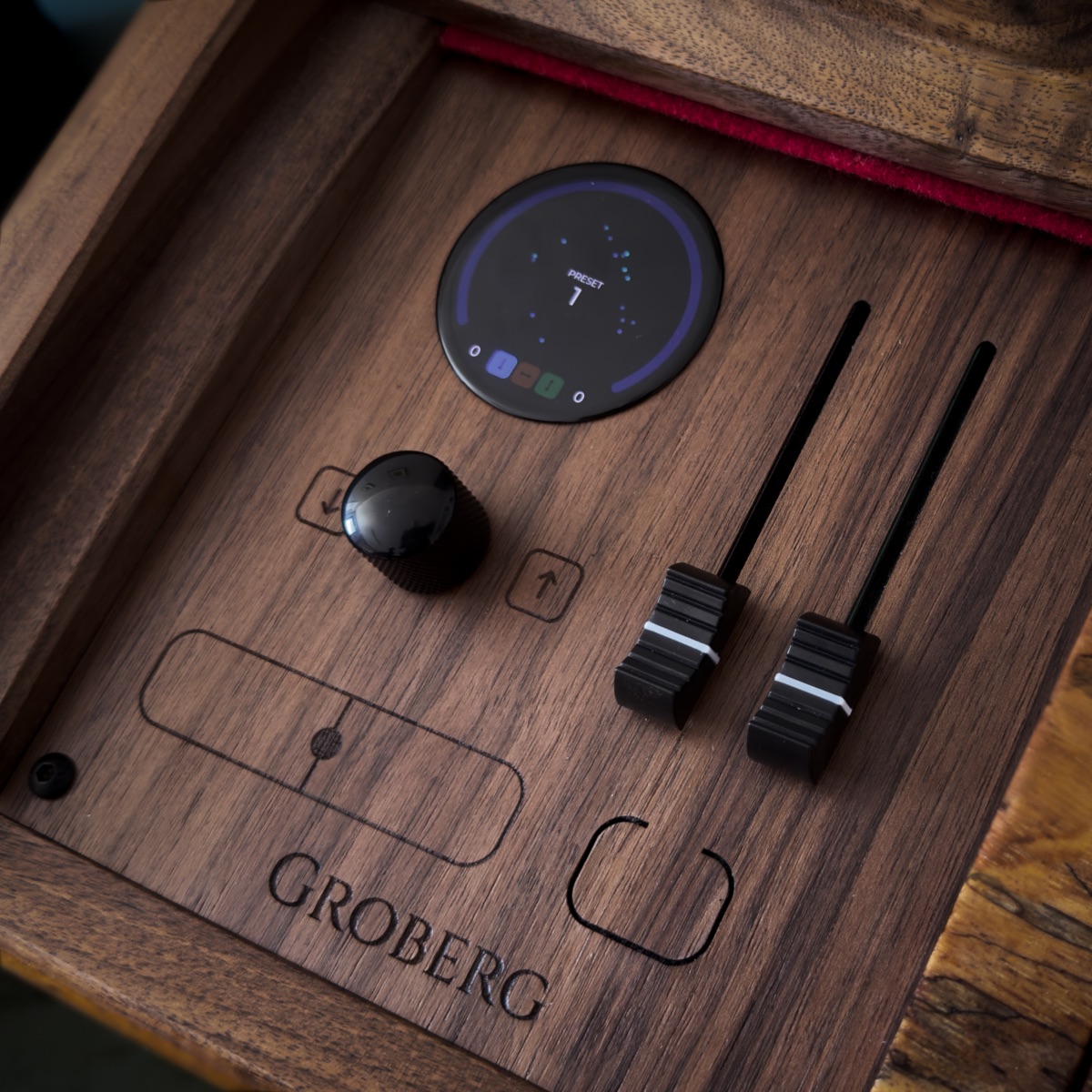
The color touch screen is viewable from all angles. It provides real time visual feedback and allows you to adjust settings and presets.
Slide and bend pitches naturally, like intonation on a fretless instrument. It senses the touch and movement of your finger for subtle vibrato effects or sliding up and down semitones. It's also great for trills and grace notes allowing you to quickly press and lift your finger at half or whole tone intervals.
This knob feels smooth like an analog control. It functions like an endless encoder, but has much higher resolution than typical stepped rotary controls. Subtle movements and large sweeps are handled with precision. Assign it to a MIDI CC such as filter cutoff.
Two analog linear sliders feel great and can be assigned to any MIDI CC.
Just below the two linear sliders is an "alt" button. You're going to love this unassuming control. When you hold it down each of your 88 keys can be used to send MIDI commands. Use them to change articulations, turn on effects, trigger shortcuts, and control your DAW.